
Wireless input
Display stream from laptop, phone, or PC.
AIRDOCK / SPATIAL WORKSPACE
AirDock is a no-headset spatial monitor that turns the desk into a private floating AI workspace.
THE INTERFACE SHIFT
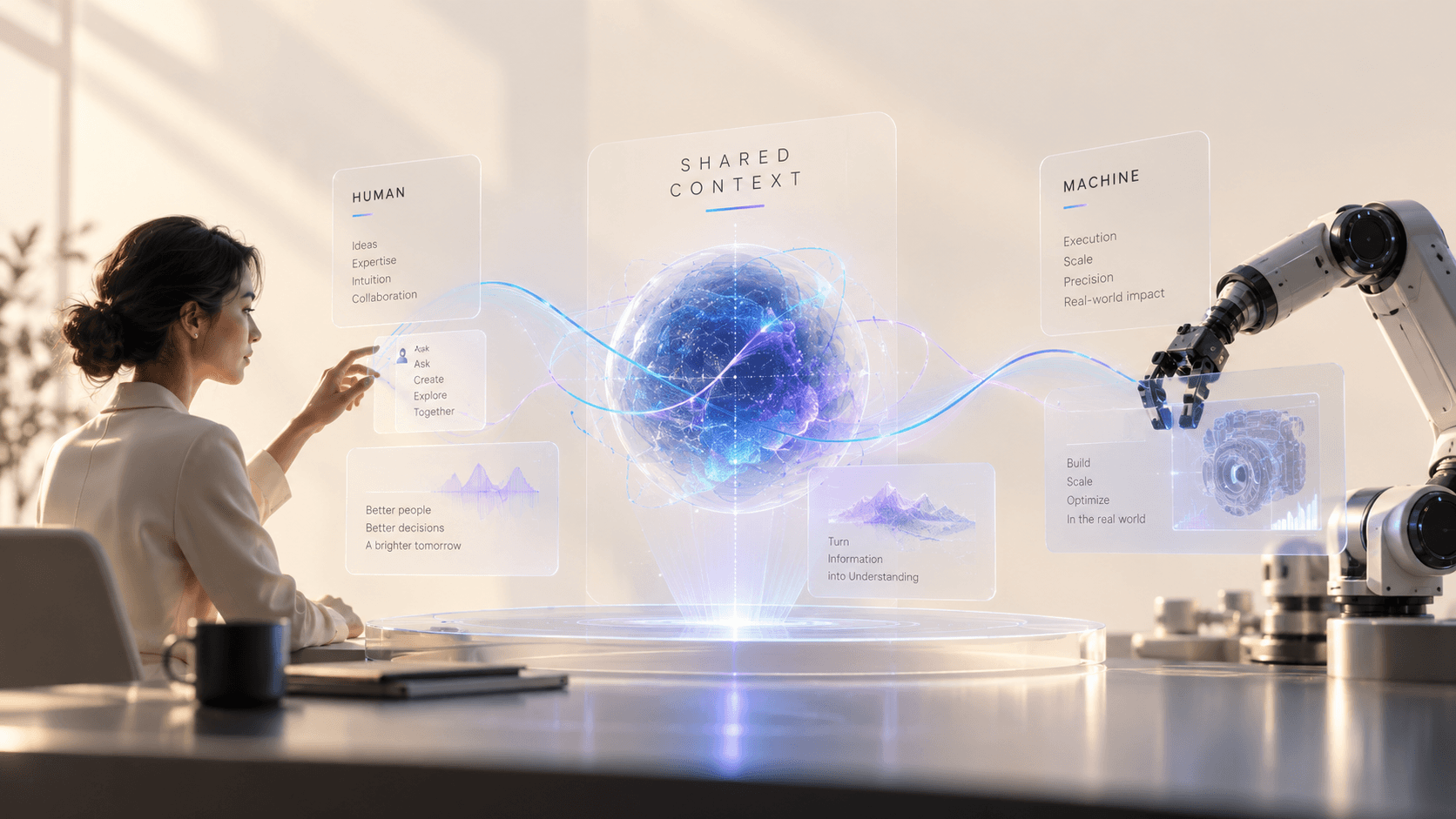
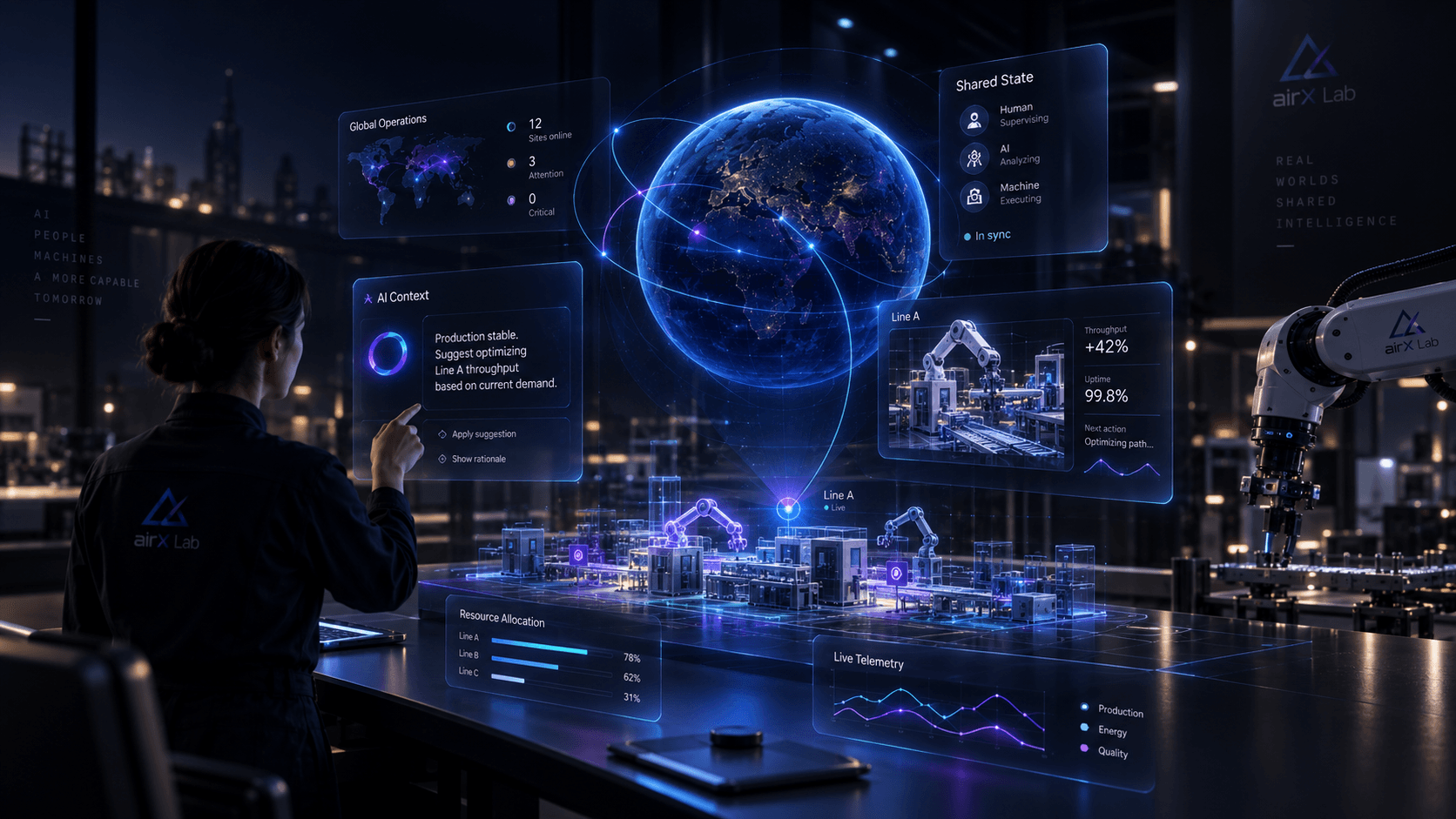
01 / FUTURE OF WORKWork is no longer just human + computer.
A REAL WORKSPACE, NOT A WEARABLE
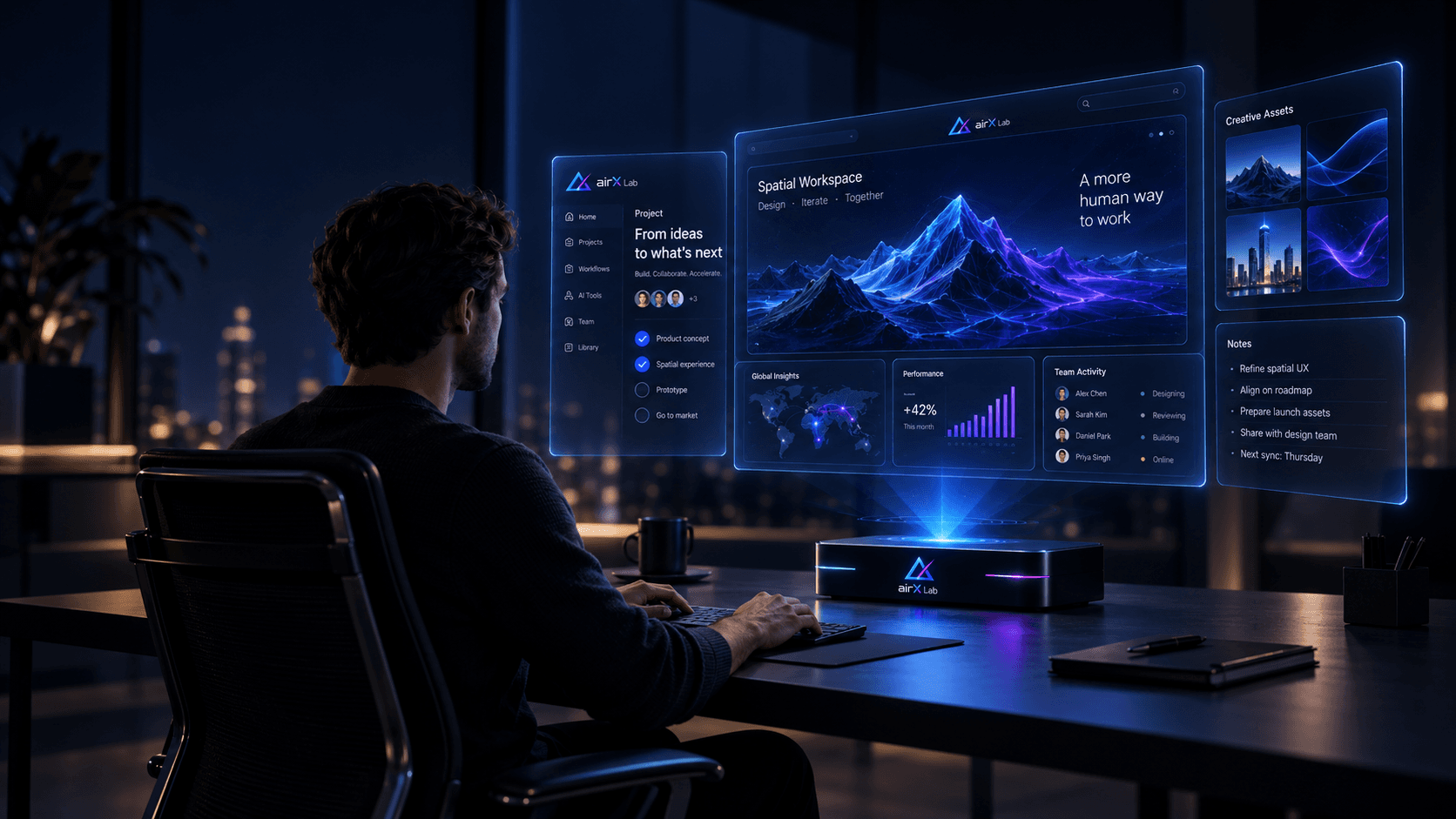
A compact base creates a readable mid-air display zone. Connect a laptop, phone, or PC and keep the interaction tools you already use.
AirDock is the wedge. AirCore is the embedded path.
SYSTEM VIEW
Wireless moves the stream; optics, sensors, compute, and AI make the image stable and usable.
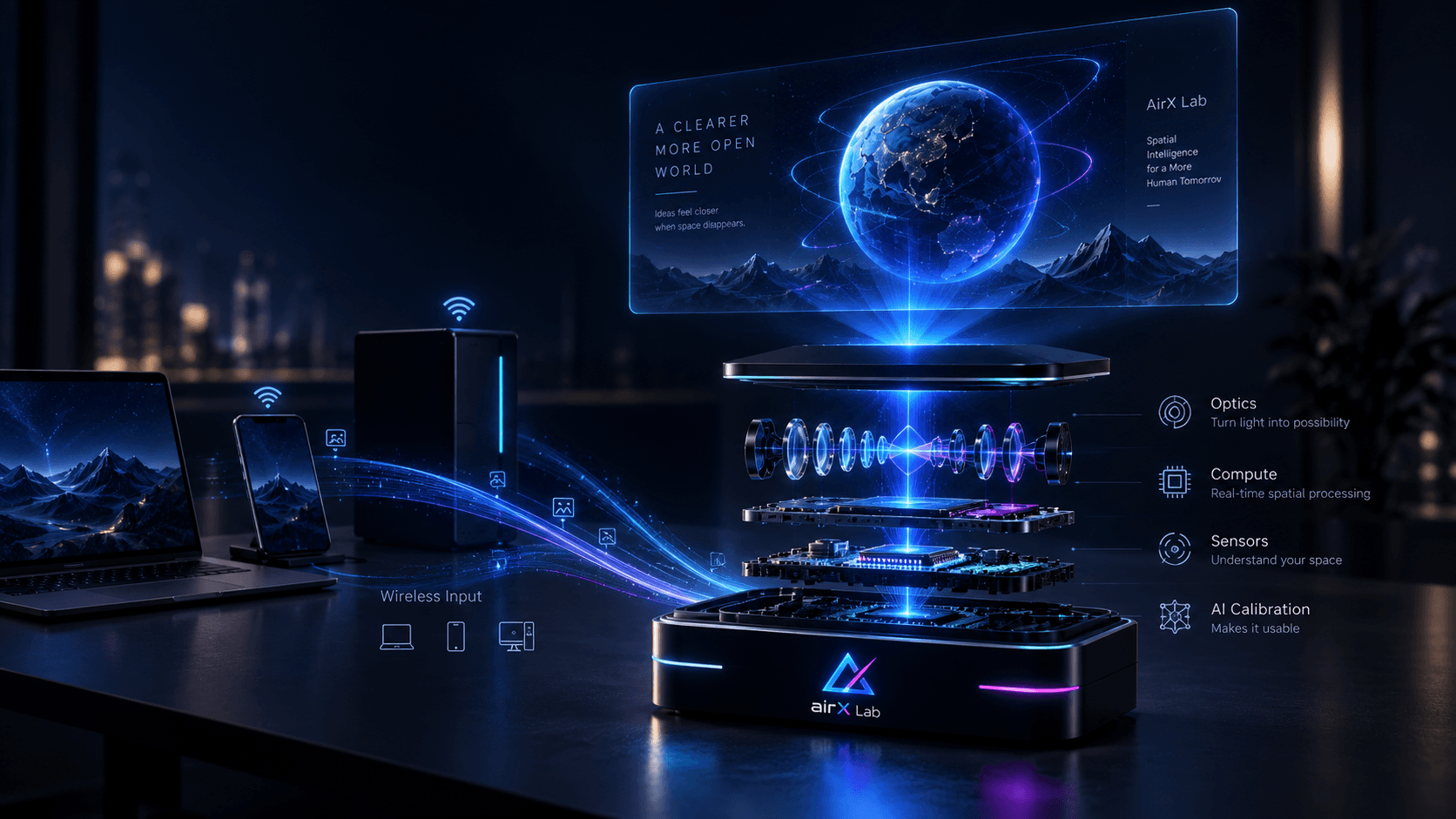
Display stream from laptop, phone, or PC.
Embedded compute, optical engine, and sensors.
Corrects distortion, brightness, and alignment.
Tracks head, hands, and room conditions.
A stable monitor-like image in front of the user.
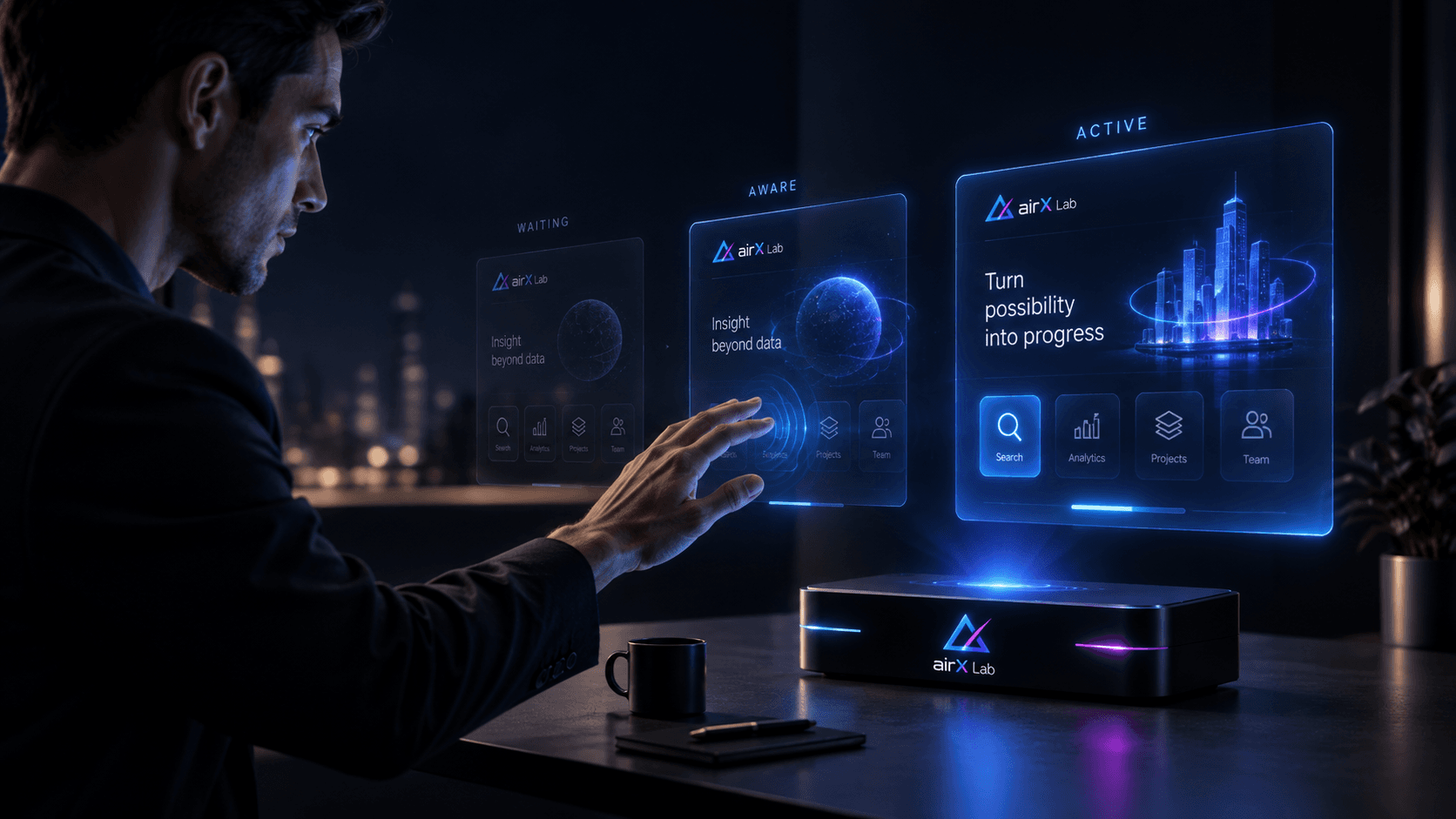
INTERACTION LAYER
Head position, hand proximity, and room conditions can become part of the interface state—not decorative effects.
ONE TECHNOLOGY / THREE HORIZONS
AirDock first. Embedded modules next. Platform software follows when repeat-use demand is proven.
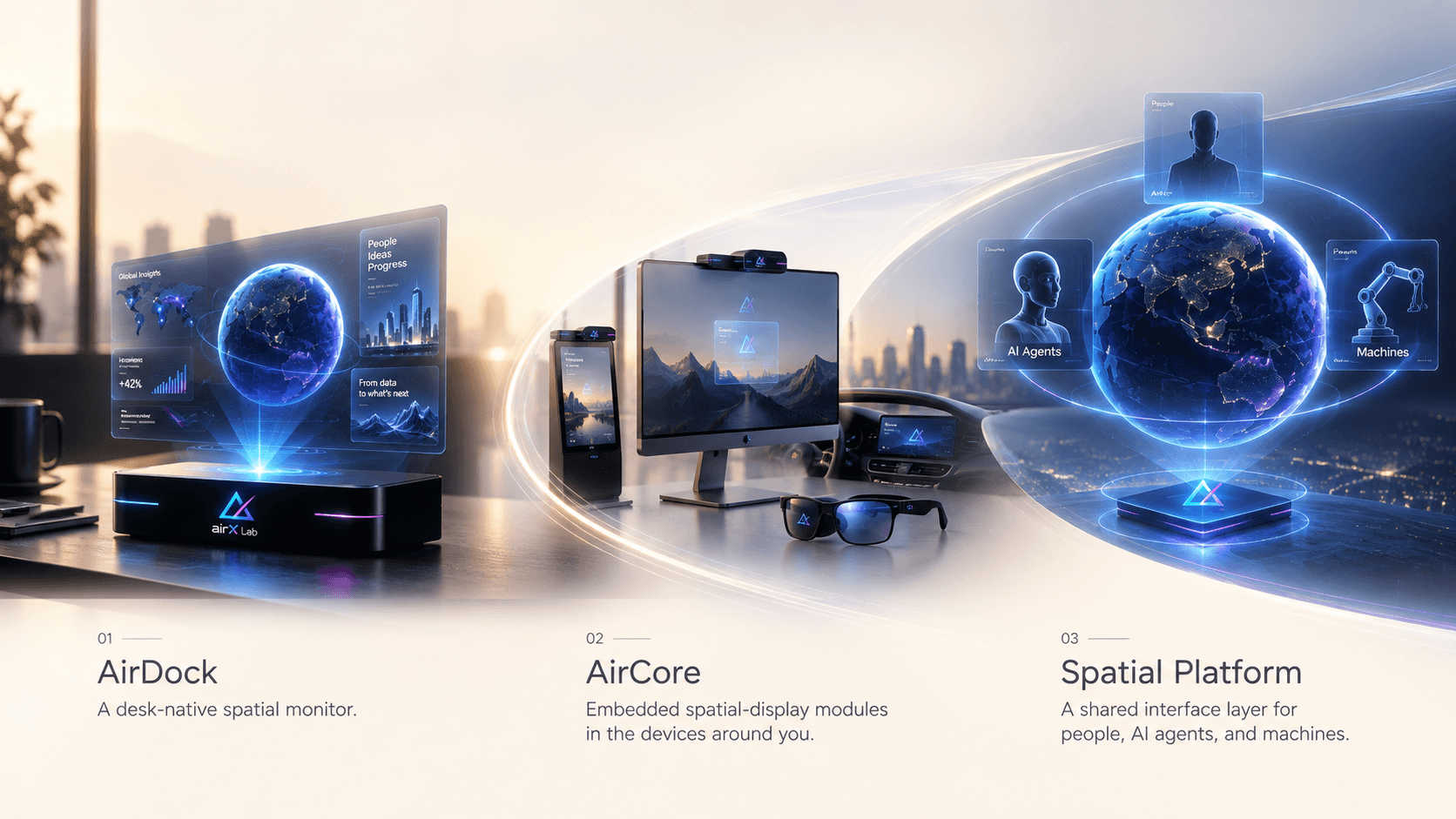
Desk-native spatial monitor for focused private work and fixed-station pilots.
Miniaturized spatial-display modules inside monitors, kiosks, vehicles, and OEM devices.
Shared interface layer for humans, AI agents, and machines after the desk wedge is proven.
LONG-TERM OPTION
AirDock stands alone as a no-headset spatial monitor. Over time, AirCore can become an embedded interface layer for fixed stations and shared human + AI + machine workflows.
AIRX LAB

Architect founder · A2Viz AI / DnBOM / airX Lab
Architect, entrepreneur, and spatial-visualization specialist with 25+ years across architecture, BIM-adjacent workflows, 3D, animation, VR/AR, real-time technology, and AI.
He built A2 Visualization into an international visualization practice and brings a long-standing architecture and design network into airX Lab—combining spatial design experience with a focus on new human, AI, and machine interfaces.
architecture, 3D, VR/AR, real-time + AI
architecture and design network across 25 countries
AIA International + ASAI member
DESIGN PARTNERS / TECHNICAL BUILD
airX Lab is interested in design partners and technical collaborators across optics, embedded systems, computer vision/calibration, and spatial interaction.